Counter-UAV
- Detect, track, classify
- VHF, UHF, HF and satellite coverage
- Downlink up to 150 km
- Military Part-145 CZE.145.1004
Find the drone and the pilot behind it before they become a problem. AIR TEAM Intel integrates airborne drone detection on manned aircraft and helicopters: sensors that detect, track and classify unauthorised UAS and pass the track and video to your command post.
Mission profiles
Critical infrastructure
Overwatch of power plants, airports and communication towers against drone intrusions.
Events and VIP protection
A moving sensor over stadiums, public gatherings and VIP visits.
Border security
Detect drones crossing the border or watching sensitive areas, and geolocate their control link.
Disaster response
Keep unauthorised drones from interfering with rescue and emergency flights.
Sensors and systems
One chain from first detection to a cue on the ground. The OEM names are examples of the classes we integrate.
RF detection and direction finding
Intercept control links and emissions across VHF, UHF, HF and satellite bands, and geolocate the source by triangulation.
Radar tracking
Airborne surveillance radar where the airframe can carry it, such as the IMSAR NSP, HENSOLDT PrecISR or Leonardo Osprey class.
EO/IR classification
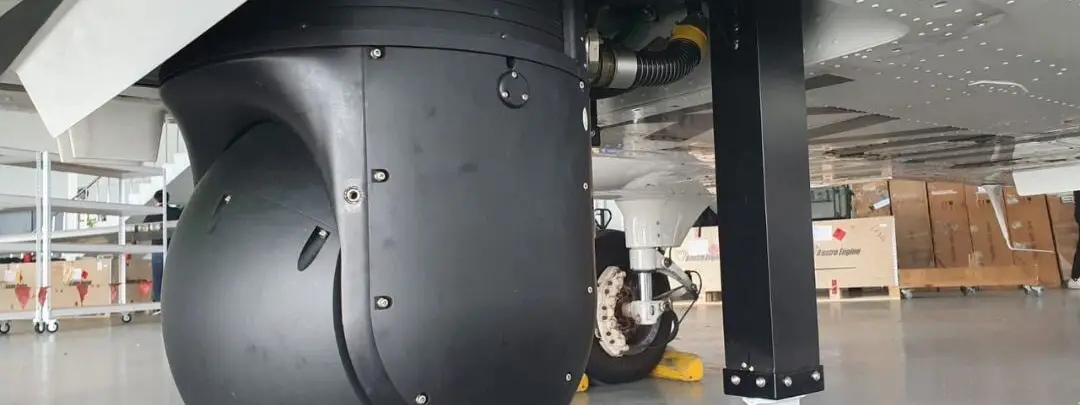
A gyro-stabilised turret, cued automatically from the RF or radar detection, confirms what the target is, day and night.
Classification support
AI and machine-learning classification on the mission workstation to cut false alarms.
Datalink to C2
Line-of-sight downlink up to 150 km and SATCOM beyond line of sight, so the track and video reach the command post.
Mission workstation
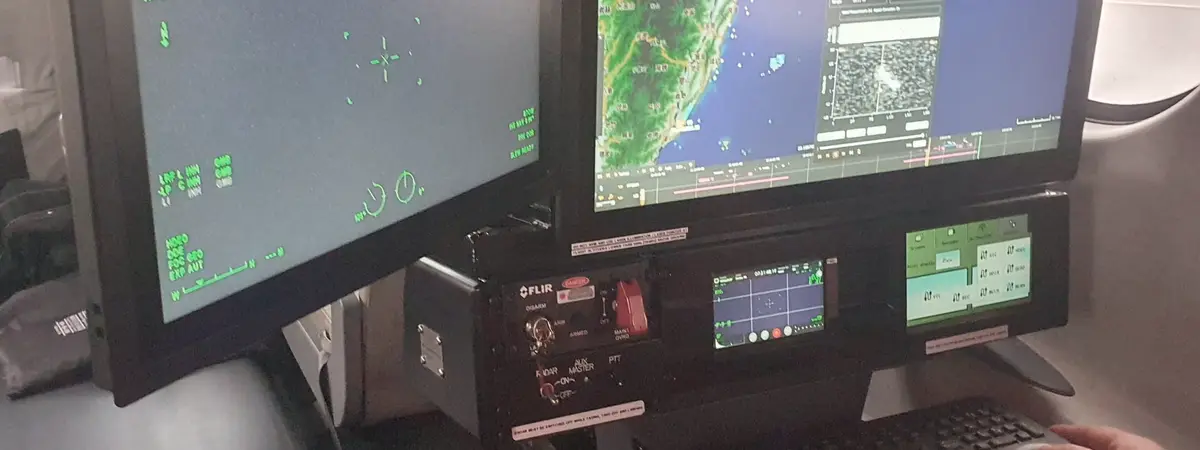
The same operator station we fly on ISR aircraft, with the drone-detection kit as one more payload.
Proven in service
GOSHAWK: a complete ISR aircraft on the Tecnam P2012
GOSHAWK is a certified ISR aircraft that already detects, identifies and reports: radar for moving targets, an EO/IR turret for identification and a live link to the command centre. A drone-detection fit uses the same sensor-to-ground chain, workstation and certification path.
Key specifications
Detection chain
- RF / DF
- Interception of RF communications and radar emissions; DF geolocation by triangulation; ELINT for radar emitters
- Frequency coverage
- VHF, UHF, HF and satellite channels
- Cueing
- Automatic EO/IR cueing from an RF detection (Smith Myers ARTEMIS class)
- Data to C2
- LOS downlink up to 150 km; 3G/4G/5G and SATCOM beyond line of sight
Radar class examples (OEM data)
- HENSOLDT PrecISR 1000
- 360° coverage, more than 1,000 tracks, up to 370 km
- Leonardo Osprey
- Up to 200 NM, 1,000 tracks
- IMSAR NSP-3 / NSP-5 / NSP-7
- SAR and moving-target modes, sized from small to large platforms
Certification and support
Certified installation
AIR TEAM Engineering designs the sensor installation and takes it through approval on your aircraft type.
Ground and flight test
Ground testing in our ISR integration zone, then flight test of the complete detection chain.
Operator training
Training on the detection chain, the workstation and the hand-off to the ground.
Maintenance and upgrades
Part-145 and Military Part-145 maintenance, and new sensors as the threat changes.
AIR TEAM Engineering designs the change under EASA design approval EASA.21J.849. AIR TEAM service installs and maintains it at Kunovice (LKKU) under EASA Part-145 CZ.145.0094 and Military Part-145 CZE.145.1004, and manufactures parts under POA CZ.21G.0075. Defence quality management is certified to NATO AQAP 2110, the quality system to ISO 9001:2015. ITAR and military trade licences are in place. All approvals →
Planning a mission-system programme?
Tell us the platform and the mission. We reply within 1 business day.